
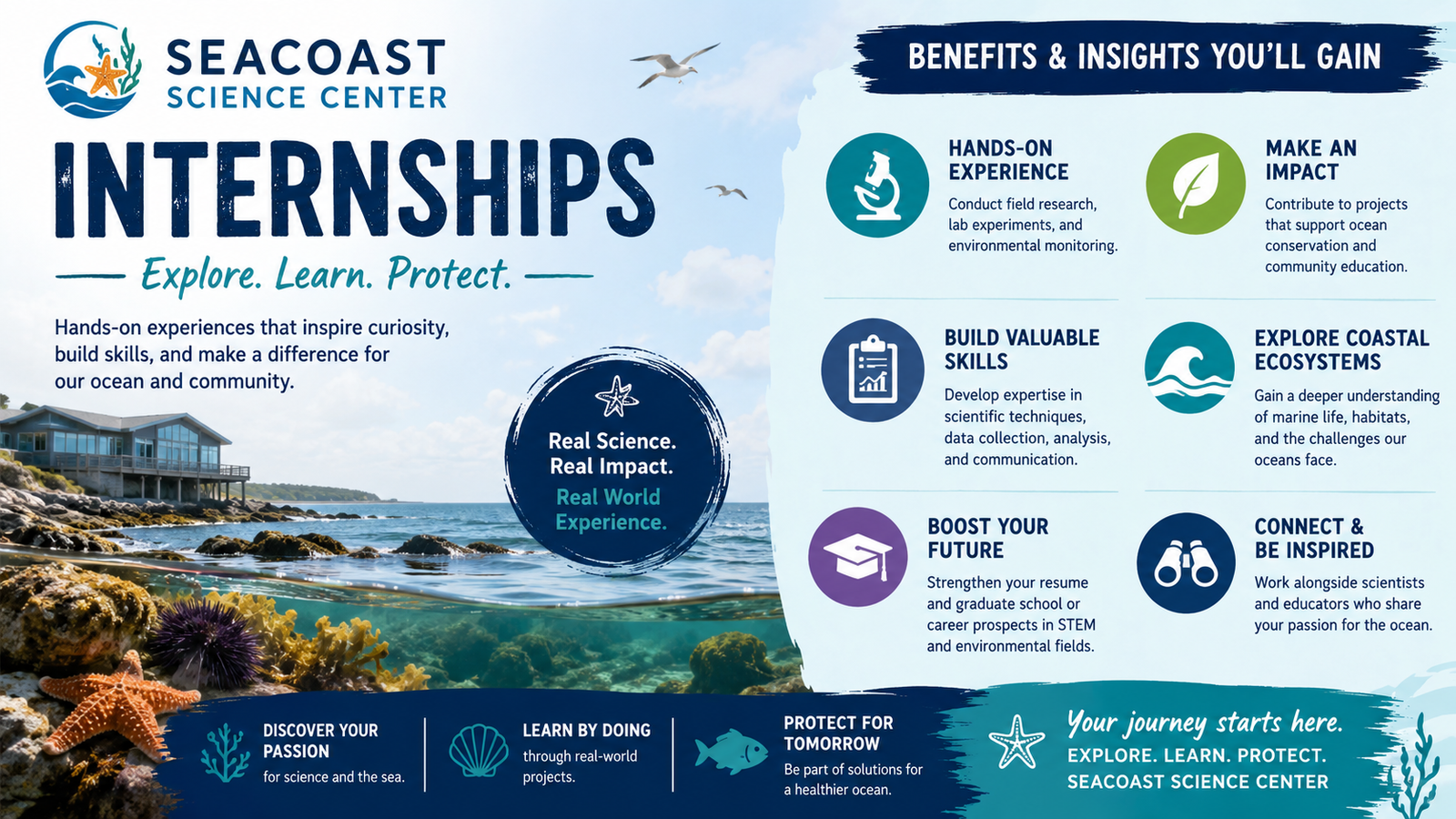

Seacoast Science Center internships offer meaningful, hands-on learning experiences for students and early-career individuals interested in marine science, environmental education, and conservation work. Located along the coastal region of New Hampshire, the center focuses on ocean literacy, ecosystem protection, and public engagement through interactive exhibits and field-based learning. These internships are designed to bridge academic knowledge with real-world environmental practice in a coastal setting.
Read further: World Economic Forum Internships
Roles and Day-to-Day Responsibilities
Interns at the center participate in a variety of roles depending on their academic background and interests. These may include marine education support, assisting with educational programs, guiding visitor experiences, conducting shoreline surveys, and helping with animal care in specialized exhibits. Interns also gain exposure to environmental research methods, data collection, and interpretation. Each task contributes to a broader understanding of marine ecosystems and conservation efforts.
Community Engagement and Outreach
In addition, interns often contribute to community outreach initiatives, school programs, and public events, which enhances their ability to engage diverse audiences. The experience strengthens communication skills and builds confidence in explaining scientific concepts in simple, engaging ways. It also provides valuable networking opportunities within the environmental science and education fields, often influencing future academic or career paths.
Training and Field Experience
Interns also benefit from specialized training sessions covering marine biodiversity, data recording techniques, and environmental safety practices. These sessions help participants develop a strong scientific foundation while building confidence in fieldwork environments such as rocky shores, tide pools, and coastal habitats. This blend of training and practice ensures interns are well-prepared for real environmental research activities.
Science Communication Skills
A major component of the internship experience is public science communication. Interns learn how to translate complex ecological concepts into clear, engaging explanations for visitors of all ages. This skill is highly valuable for careers in education, museums, and conservation outreach. It also improves adaptability in interdisciplinary teams involving scientists, educators, and volunteers.
Collaborative Learning Environment
The internship environment is typically collaborative and supportive, allowing interns to share ideas, ask questions, and participate in ongoing projects aligned with the center’s mission of ocean conservation and public awareness. This immersive setting ensures that learning extends beyond theory into practical environmental problem-solving.
Overall Impact and Long-Term Value
Seacoast Science Center internships stand out as impactful opportunities for individuals seeking meaningful engagement with marine science and environmental stewardship. The combination of hands-on experience, mentorship, and community involvement creates a well-rounded learning journey that prepares interns for future academic and professional pathways. Participants leave with stronger skills, deeper environmental awareness, and a lasting appreciation for coastal ecosystems and their protection.
Many alumni remain connected to the center through volunteer work or environmental advocacy, reflecting the long-term influence of the internship experience.
Online Apply
Submit your application digitally via the official link.